

How Quartz Countertops Compare to Granite and Marble
Choosing the perfect countertop material is one of the most significant design decisions you will make for your kitchen or bathroom. The surface you select needs to withstand hot pots, sharp knives, messy spills, and heavy daily use while serving as a gorgeous focal point for your interior design. For decades, natural stones like granite and marble were considered the absolute gold standards of luxury. However, modern engineered stone has completely transformed the home remodeling landscape, offering an incredibly tough and versatile alternative.
The global appetite for these premium surfaces continues to expand at a staggering rate as residential construction and design trends grow. According to Farmonaut, global mining output for granite, marble, and quartz is projected to reach 950 million tons by 2026. If you are planning a renovation, understanding how an engineered surface matches up against traditional natural stone slabs is essential for picking the right fit.
Evaluating the Raw Material Composition of Each Slab
The fundamental performance differences between these three high-end materials stem directly from how each slab is created. Marble and granite are entirely natural stones formed deep within the earth over millions of years through intense heat and crustal pressure. Granite is an igneous rock made of fused minerals like feldspar and crystalline silica, whereas marble is a metamorphic rock composed primarily of recrystallized calcite minerals. These stones are quarried straight from the ground in massive blocks and sliced into raw panels without any artificial structural alterations.
In contrast, quartz countertops are engineered surface products manufactured inside specialized fabrication facilities. These composite slabs are created by taking approximately 90% to 95% ground mineral crystals and mixing them with high-performance polymer resins, pigments, and binding agents under intense vibration, vacuum, and pressure. While natural stone slabs contain varying, organic mineral concentrations, an engineered quartz slab features a highly regulated, dense composition.
Testing Structural Toughness and Daily Scratch Resistance
When it comes to raw structural hardness in the busy kitchen workspace, engineered composites offer exceptional performance compared to natural options. The ground crystals used to build these manufactured slabs score a 7 on the Mohs hardness scale, making them significantly harder than marble and completely equal to or stronger than premium granite varieties. This dense material threshold means a high-quality quartz surface is exceptionally difficult to scratch, gouge, or chip during heavy daily cooking sessions. You can slice vegetables, slide heavy cast-iron skillets, and drop metal utensils across the surface with minimal risk of damaging the finish.
While granite handles heavy mechanical impacts well, marble is notoriously soft and brittle, scoring only a 3 to 4 on the hardness scale. A stray metal fork, a sliding ceramic plate, or a heavy soup can drop can easily leave permanent deep scratches, chips, and gouges across a soft marble surface. Furthermore, because engineered quartz is bound together with flexible resin polymers, it possesses superior flexural strength compared to natural stones.
Analyzing Porosity and Liquid Stain Absorption Levels
The single biggest operational advantage of choosing a manufactured product over a natural earth-quarried slab lies in its completely non-porous surface structure. Because natural granite and marble are filled with microscopic networks of internal pores, capillaries, and air pockets, they behave exactly like hard sponges when liquids are left on the surface. If you spill dark liquids like red wine, morning coffee, olive oil, or hot tomato sauce onto an unprotected natural stone, the fluid will rapidly seep deep into the rock grain, leaving permanent, ugly internal stains that are practically impossible to scrub out.
The advanced manufacturing process used to build engineered quartz completely eliminates this liquid absorption hazard. Under extreme factory compression, the liquid polymer resins fill every single microscopic air pocket and pore inside the mineral mixture, creating an absolutely solid, non-porous shield. Because fluids cannot penetrate the surface layer, dark juices, staining spices, and greasy cooking oils sit safely on top of the material until they are wiped away.
Managing Seasonal Maintenance and Chemical Etching Risks
Beyond basic stain resistance, keeping natural stone looking pristine requires a continuous commitment to routine maintenance and protective chemical treatments. Because granite and marble are naturally porous, they must be meticulously coated with specialized chemical sealants every 6 to 12 months to maintain a functional liquid barrier. If you skip this mandatory sealing routine, your counters will become highly vulnerable to staining. Furthermore, marble reacts chemically to acidic substances like lemon juice, vinegar, and household cleaners, causing a permanent chemical burn known as etching that destroys the polished shine.
Engineered quartz eliminates this ongoing maintenance chore from your household schedule because it never requires chemical sealing or polishing treatments to remain stain-resistant. You can clean the non-porous material using mild dish soap, warm water, and a soft microfiber cloth without any specialized stone cleaner purchases.
Evaluating Pattern Consistency and Overall Aesthetic Flexibility
From a visual design perspective, the choice between these materials determines whether your room features dramatic, unpredictable movement or uniform geometric harmony. Every single quarry-cut granite and marble slab is unique, displaying organic mineral veins, unexpected color pockets, and wild structural movements that can never be exactly replicated. If you value authentic stone aesthetics and want a completely one-of-a-kind kitchen design, the natural unpredictability of real stone slabs is undeniably beautiful.
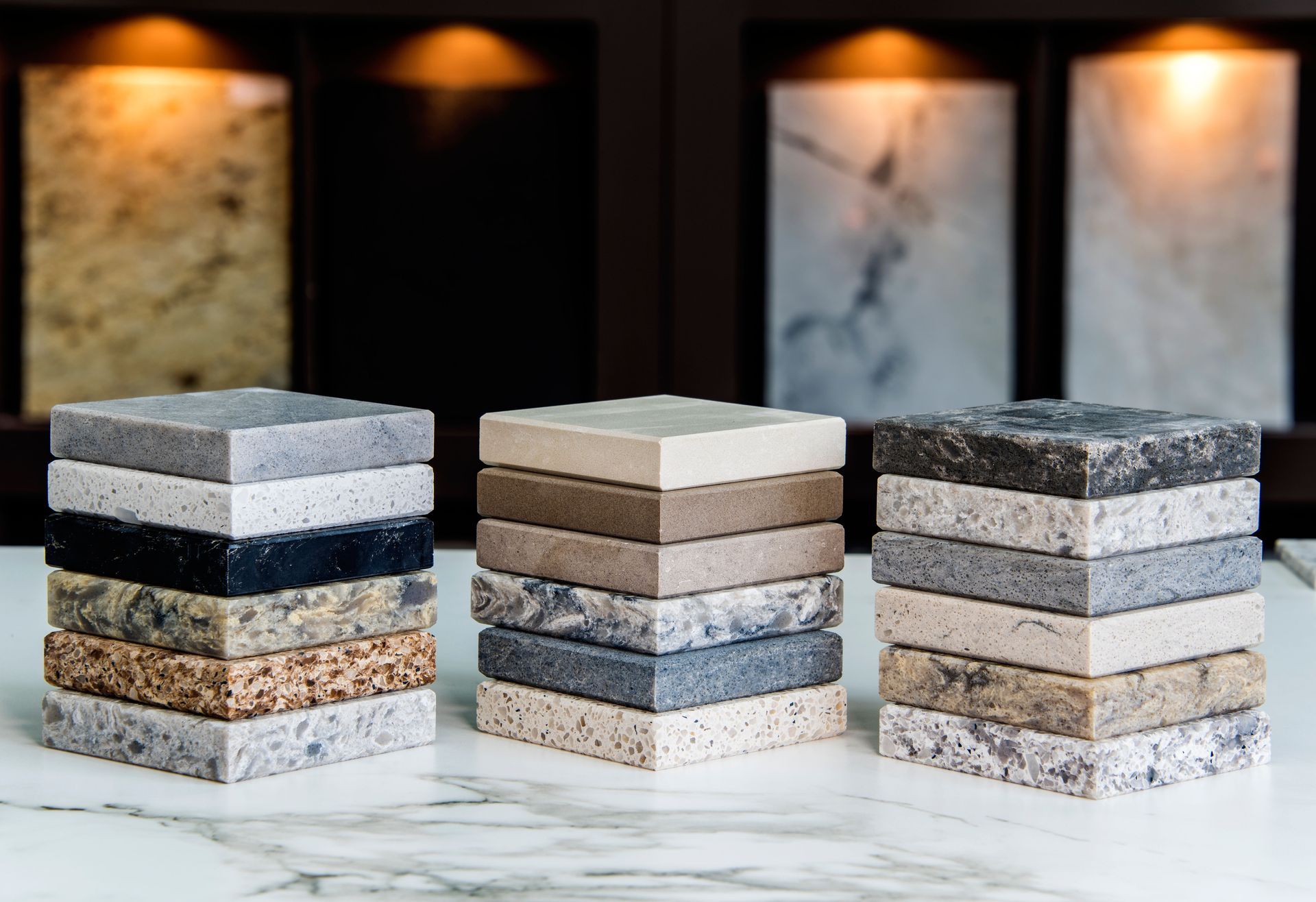
However, this natural variation can make it incredibly difficult to match up seams cleanly along large L-shaped counter layouts or multi-slab kitchen islands. Engineered quartz completely solves this layout puzzle by delivering absolute color uniformity and pattern consistency across every single slab in a specific production run. Because the patterns are digitally controlled in a factory, you can easily seam multiple panels together with nearly invisible joint lines. Furthermore, manufacturing flexibility allows quartz to be styled in an unlimited array of colors, ranging from minimalist solid whites to flawless reproductions of elegant, dark-veined white Carrara marble, giving you complete freedom to match any modern design theme.
Sustaining a beautiful, clean, and durable countertop surface over your entire life requires a steady combination of smart material selection, proper cleaning habits, and simple thermal protection measures. Your kitchen counter serves as the primary workbench for your family meals and the visual centerpiece of your home’s main social hub, meaning that selecting a material based solely on price without analyzing its physical properties can lead to frustrating maintenance issues and premature structural damage down the road. Stepping away from delicate, high-maintenance natural stone slabs and choosing an engineered stone alternative is the absolute best way to insulate your renovation budget from constant resealing costs and permanent chemical stain damage.
When you take the time to prioritize non-porous, highly resilient engineered materials for your home, you unlock higher daily convenience, eliminate annoying chemical sealing routines, and gain total confidence in your surface's long-term cleanliness. Precision-engineered stone transforms a high-traffic utility counter back into a pristine, beautifully polished architectural masterpiece that easily resists heavy spills, sharp blades, and daily impacts without losing its factory shine. If you notice your current counters are starting to dull, realize you are tired of scrubbing stubborn coffee stains out of porous stone, or are actively planning a gorgeous kitchen upgrade for the new year, do not wait for a major stain disaster to take action. Visit Merlino Marble and Granite online today to explore your engineered
quartz design choices, view fresh marble-look samples, and consult with a local countertop specialist to select the absolute perfect surface for your home.





Share On: